PhD candidate at UNSW working on event-based vision and perception for robotics. I also built and run Hango, an event recommendation and social coordination app on iOS and Android, as its only engineer.
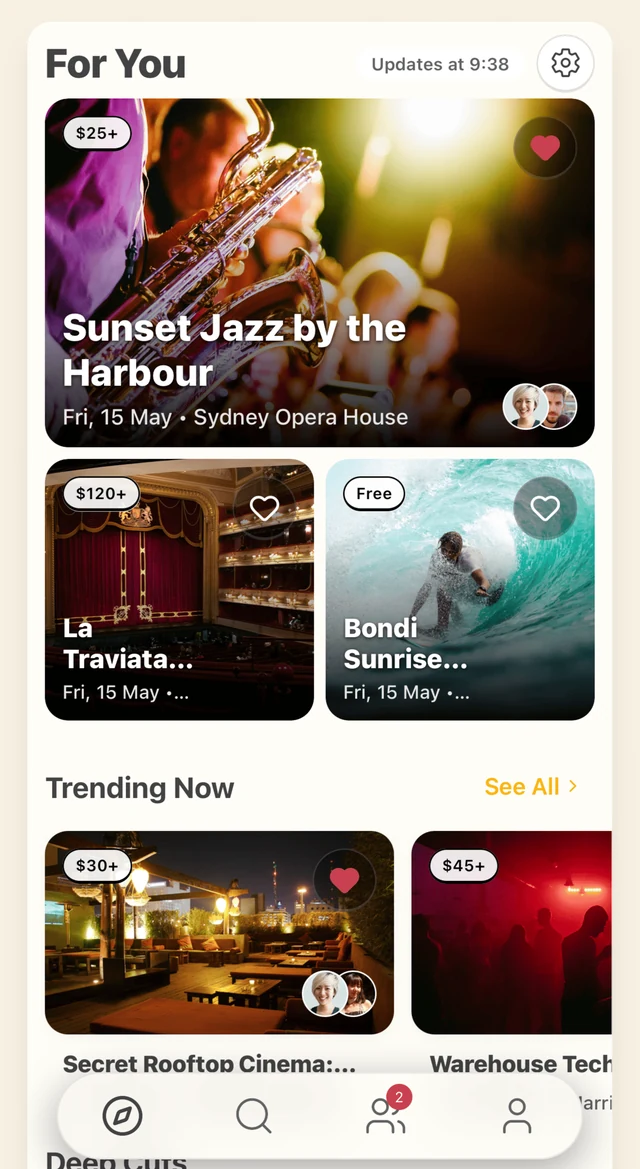
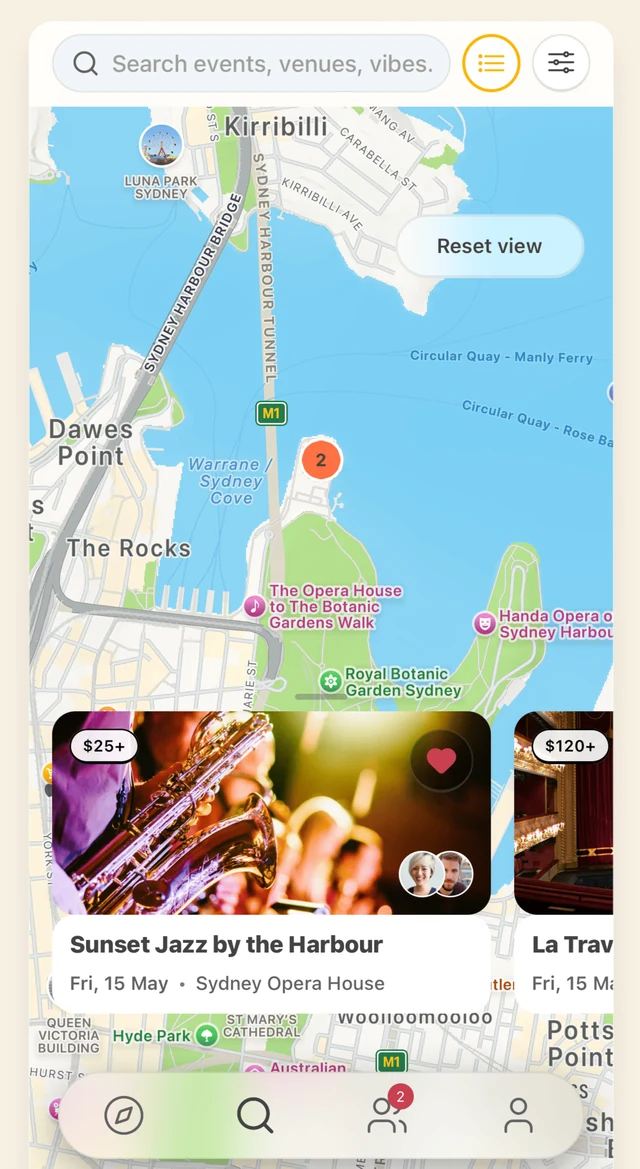
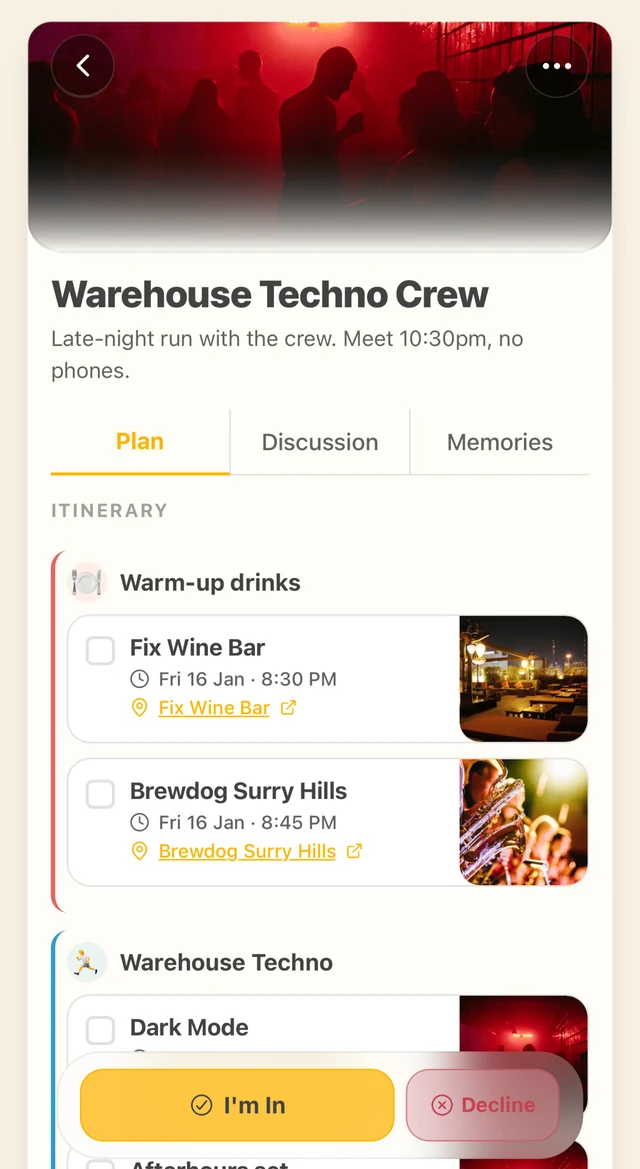
An event recommendation and social coordination app for Sydney, live on the App Store and Google Play. I built and run the entire stack as the only engineer.
These screenshots are seeded with demo data. The live app ranks against a Postgres database of around 11,000 event templates across 2,000 Sydney venues.
Recommender. Personalized feed written in PL/pgSQL over pgvector. Each person is modelled as a handful of weighted interest centroids, updated as they use the app. The ranking spends some of its slots on safe matches and the rest on deliberate reaches. Written up here.
Group scoring. Recommending to several people at once with a max-plus rule, so one strongly matched member can carry the choice instead of the group averaging into something nobody wanted.
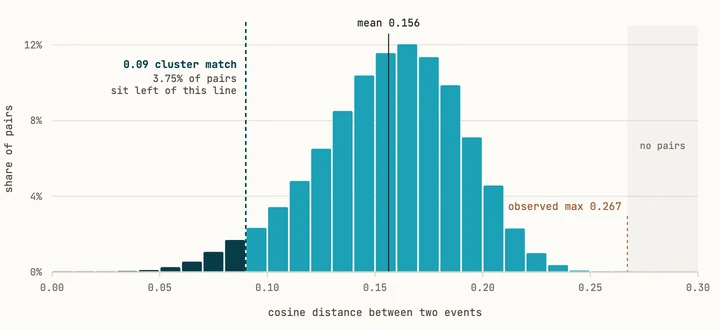
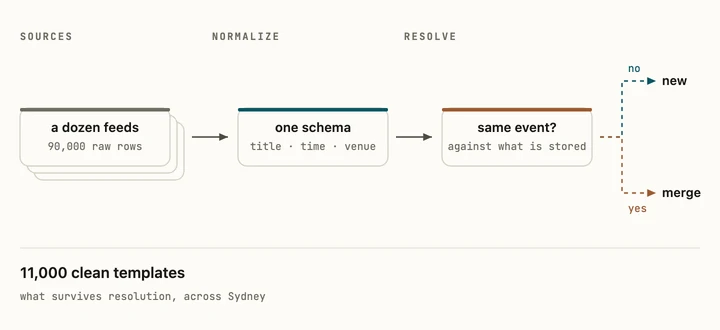
Data pipeline. An LLM ingest pipeline that scrapes unstructured listings and resolves them against what is already stored. It has turned about 90,000 raw events into 11,000 clean templates across 2,000 venues, with human review held under 1%.
Serving and infrastructure. A Deno and TypeScript edge-function API covering search, the group itinerary builder, push notifications and place resolution. Row-level security on every table, instrumented with PostHog and Sentry.
Frontend. The cross-platform app in React Native and Expo, on iOS, Android and a shareable webview.
Teaching Assistant · UNSW
Sydney
Feb 2022 – Present
Tutorials and lab sessions in robotics, state estimation and postgraduate AI.
Robotics (MTRN4230). Forward and inverse kinematics, DH parameters and trajectory planning.
State estimation (MTRN4010). Extended Kalman Filters and sensor fusion.
Postgraduate AI (COMP9414). Search, machine learning and reasoning.
Software Engineer · Honeywell
Intern, retained part-time · Sydney
Dec 2021 – Sep 2022
C++BoostPython
Joined as a summer intern and retained part-time through the academic year on the backend of Experion, Honeywell's flagship process-control platform.
Developed backend features in modern C++ with Boost, and automated the nightly build-archiving process in Python.
Worked in an Agile team, using JIRA, Confluence and Git.
02
Publications & research
Published · NCE 2026
Continuous Attribution on Discrete Spikes: Revealing the Explainability Paradox in Spiking Neural Networks
M. Oltan Sevinc, Liao Wu, Francisco Cruz
Neuromorphic Computing and Engineering (IOP) · first author
spiking neural networksSpikingJellyPyTorchGrad-CAMSmoothGradneuromorphic data
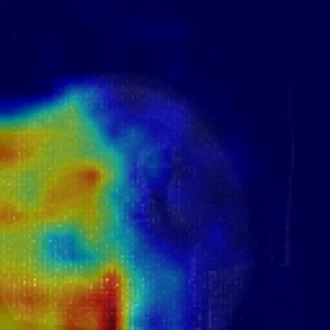
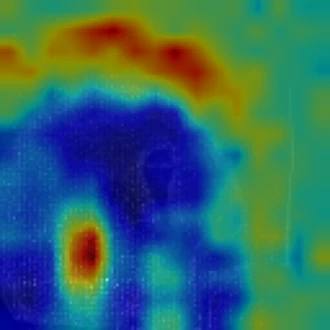
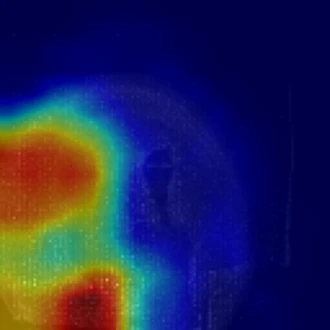
Class activation maps explain conventional networks well and break in specific ways on spiking ones, where the signal is discrete and spread over time. The paper works out why, shows that the usual way of smoothing an explanation pushes sparse event data somewhere no sensor could have taken it, and proposes Poisson SmoothGrad, a noise model that stays inside what the data could plausibly be. Across six attribution methods and three datasets no single method wins: Poisson smoothing leads the gradient-based methods on event data, and the Spike Activation Map is strongest overall. It closes with a practitioner’s guide to which method to reach for, on which kind of input.
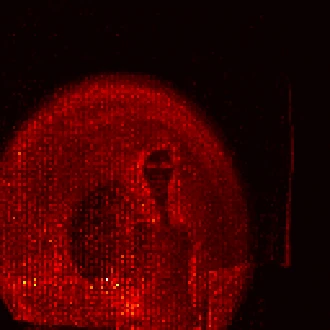
One DVSGesture sample. Gaussian noise pushes the input somewhere no sensor could have taken it, and the explanation slides off the subject onto empty background; Poisson noise keeps it on the person.
Published · ACRA 2025
Towards Closing the Domain Gap with Event Cameras
M. Oltan Sevinc, Liao Wu, Francisco Cruz
Australasian Conference on Robotics and Automation · first author
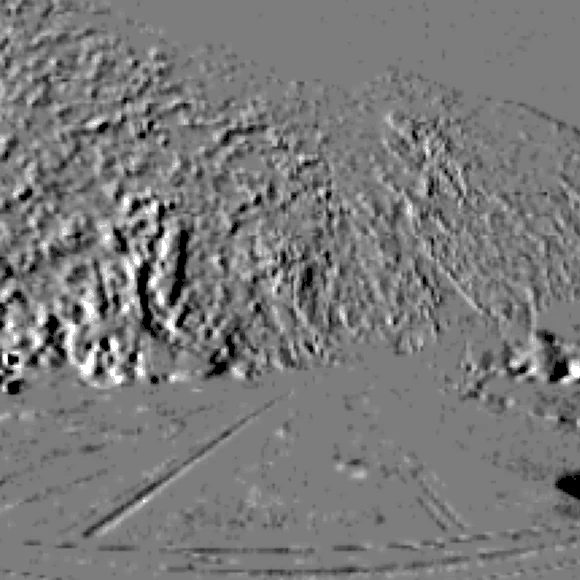
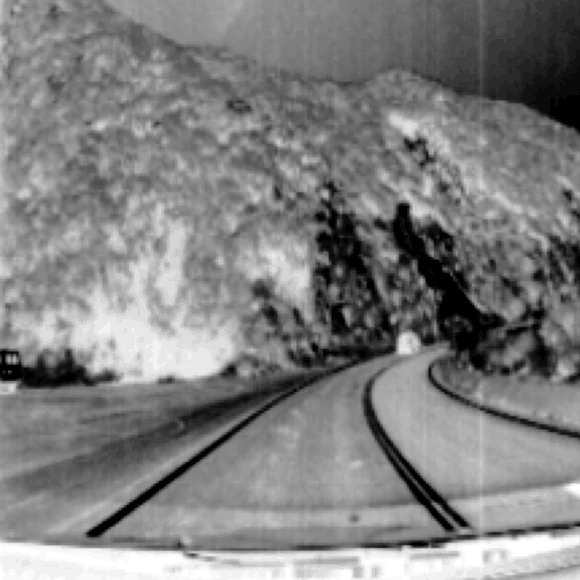
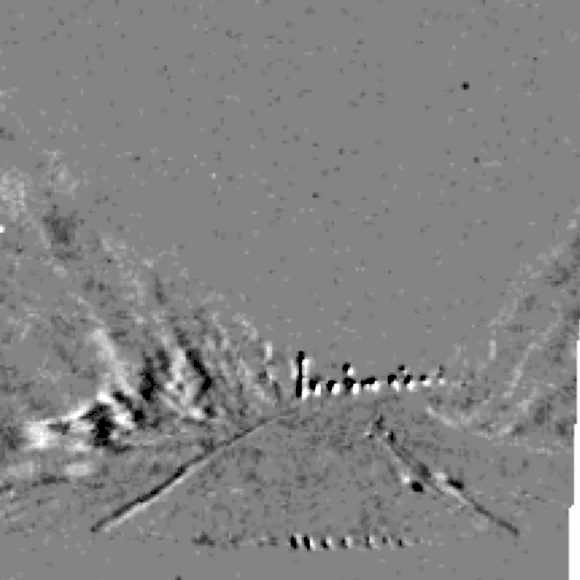
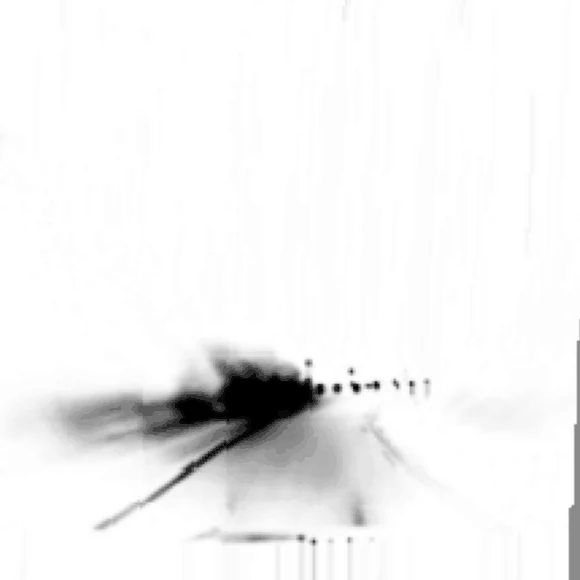
Compares event cameras with grayscale frames for end-to-end driving across day and night. Models trained on event data degrade much less under lighting shifts, since event cameras respond to relative brightness change rather than absolute intensity.
Each sensor pair was captured simultaneously; day and night are comparable stretches of road, not the same one. The event stream changes little between them; the frame camera collapses into glare.
In preparation
Calibrated Search Regions for Re-acquiring Drones from Event Cameras
When a tracker loses a drone, where should it look to pick it up again? A useful search region is small, and contains the drone as often as it claims to. At matched coverage, a learned forecaster’s 90% region is about a quarter the size of the best recalibrated motion filter’s: roughly 0.2% of the frame, 0.4 s after the loss. Flow matching gets there, but drone futures rarely branch, so a one-pass Student-t head is as tight and as well calibrated at under half the latency. Used as the detector’s search window, the region removes a third of the false positives a fixed box lets through, and the drone’s own events, which keep arriving through the dropout, help carry its identity across the gap.
Honours Thesis · 2023
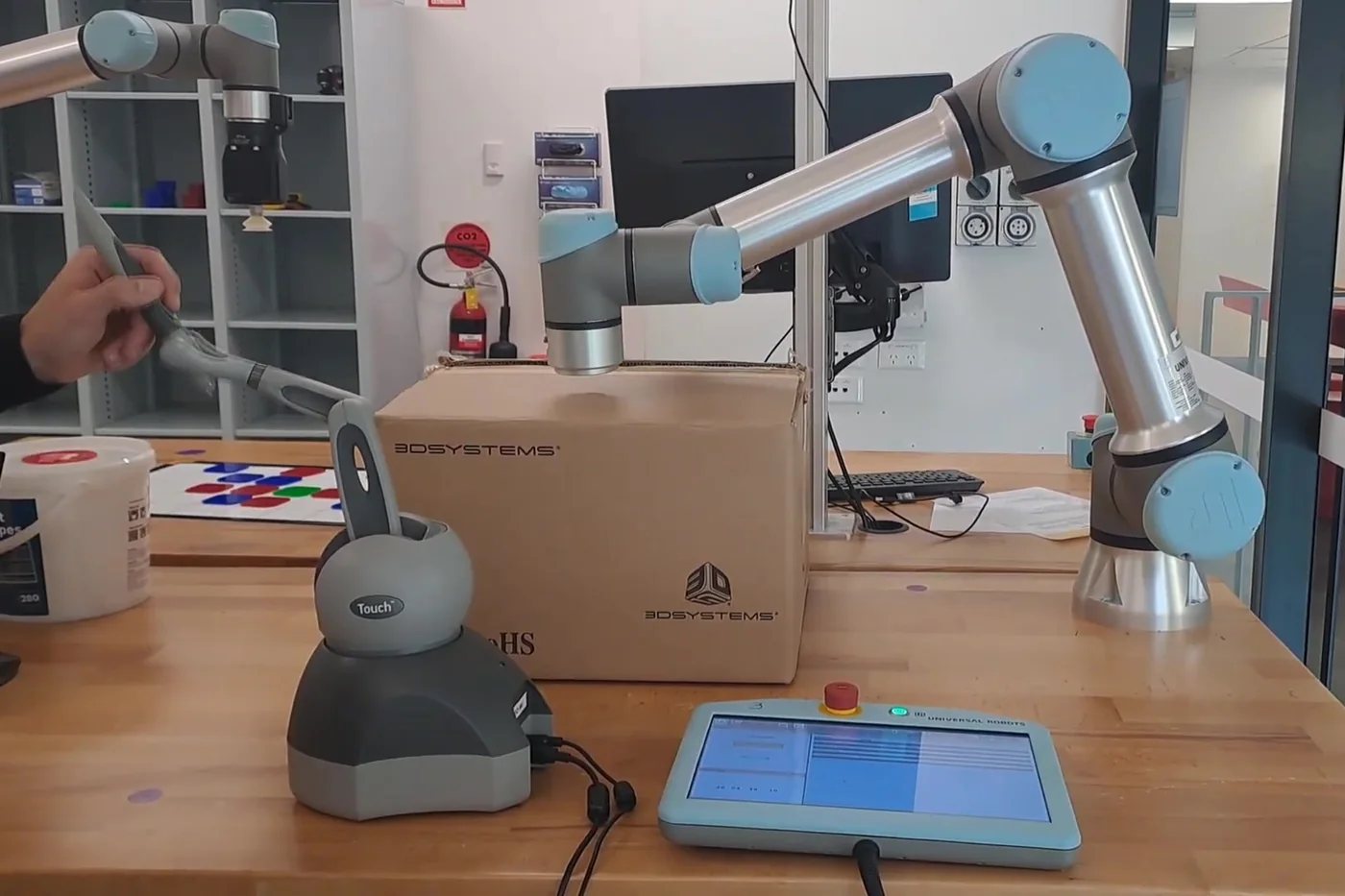
Robotic Teleoperation with Haptic Feedback for Remote Ultrasounds
B.E. Mechatronic Engineering (Honours) · supervised by Liao Wu
UNSW Sydney
ROSMoveItPythonUR5ehaptics
A real-time haptic teleoperation interface between a Universal Robots UR5e arm and a 3D Systems Touch device over ROS and MoveIt, using quaternion-derived angular velocity, deadband and consecutive-zero filtering, and force feedback from the arm's own sensor.
Thesis: Applications of Spiking Neural Networks in Robotics. Supervised by Liao Wu and Francisco Cruz. Australian Government Research Training Program (RTP) Scholarship.
B.E. Mechatronic Engineering (Honours) and Computer Science (AI) · UNSW Sydney
2018 – 2023
Honours thesis on robotic teleoperation with haptic feedback for remote ultrasound, supervised by Liao Wu.
Normalizing records from a dozen sources that disagree, resolving them against what is already stored, and deciding which near-duplicates are the same event. Hango's ingest as the worked example.
PerceptionLater
How to keep a vision model working after dark
Why a model trained on event-camera data barely notices when the lights go out, what that costs elsewhere, and when the swap is worth making. From an ACRA 2025 paper on the day-night domain gap.